
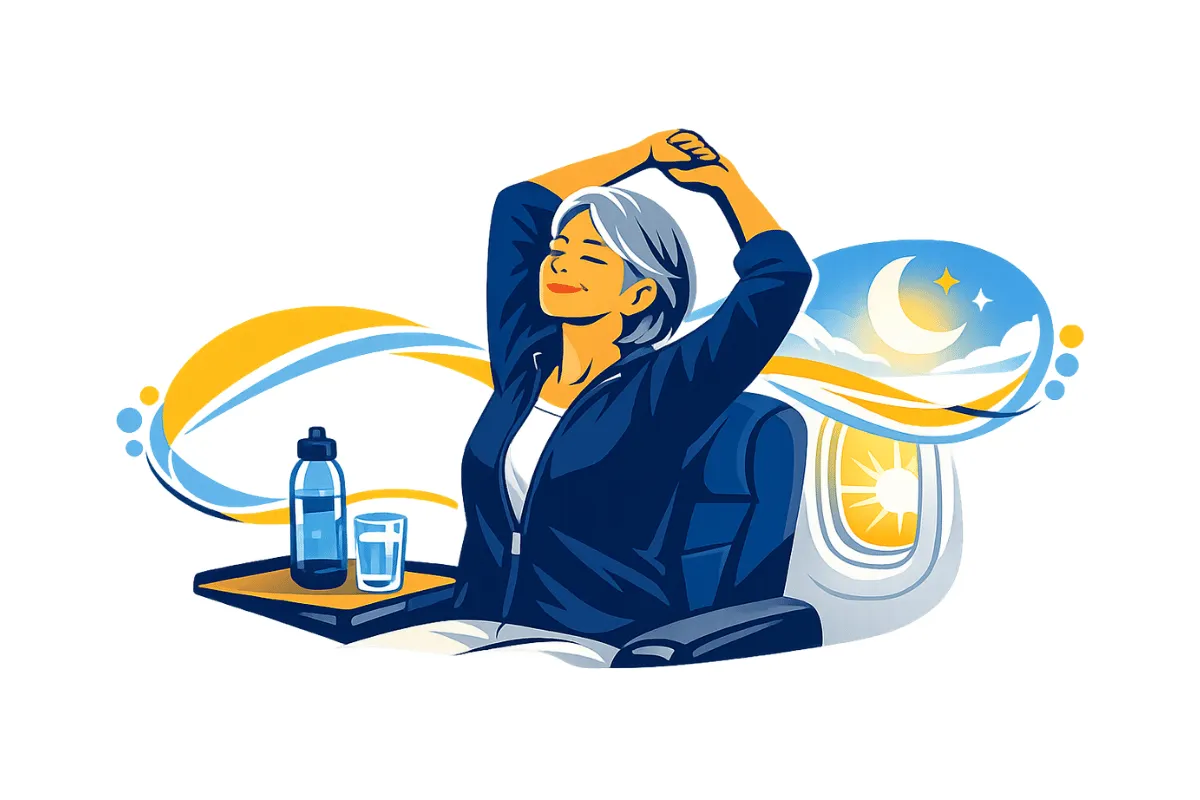
How to Biohack Jet Lag and Travel Fatigue
Why Biohacking Jet Lag Matters More Than You Think
Long flights, time zone changes and disrupted routines can leave your body feeling foggy, wired or completely drained. Many people assume jet lag is unavoidable, but the truth is that your body has a predictable rhythm. When you understand how that rhythm works, you can support it. This is where biohacking jet lag becomes powerful. Instead of waiting days to feel normal again, you can help your body adjust faster and recover more smoothly.
Jet lag happens when your internal clock becomes out of sync with the local time. Your circadian rhythm influences your sleep, digestion, hormones, mood and energy. When you travel across time zones, this rhythm becomes confused. Biohacking jet lag is about helping your body reset that rhythm using simple, natural tools that work with your biology.
Travel fatigue is slightly different. It is the exhaustion that comes from long periods of sitting, dehydration, poor sleep and sensory overload. You can reduce both jet lag and travel fatigue with small, intentional habits before, during and after your flight.
How Your Circadian Rhythm Influences Jet Lag
Your Body Runs on a 24-Hour Clock
Your circadian rhythm is your internal clock. It tells your body when to wake, when to sleep, when to digest and when to release certain hormones. Light is the main signal that sets this clock. When you travel across time zones, your body receives light at the wrong times. This confuses your rhythm and creates jet lag.
Supporting your circadian rhythm is one of the most effective ways to biohack jet lag.
Melatonin and Cortisol Influence Your Energy
Melatonin helps your body prepare for sleep. Cortisol helps you wake up and feel alert. When you travel, these hormones become misaligned. You may feel tired during the day and awake at night. Biohacking to help with jet lag realigns these hormones so your body adjusts faster.
Digestion Follows Your Internal Clock
Your digestive system also follows a rhythm. When you eat at unusual times, your gut becomes stressed. This contributes to travel fatigue and makes jet lag feel worse. Supporting digestion helps your body adjust more easily.
How to Biohack Jet Lag Before You Fly
Shift Your Sleep Schedule Gradually
One of the simplest ways to biohack jet lag is to shift your sleep schedule before you travel. If you are flying east, go to bed slightly earlier. If you are flying west, go to bed slightly later. Even a small shift helps your body adjust.
Support Your Body With Light Exposure
Light is the strongest signal for your circadian rhythm. Getting morning sunlight before your trip helps stabilise your internal clock. This makes it easier to adjust when you arrive.
Stay Hydrated in the Days Before Travel
Hydration influences energy, digestion and sleep. When you are dehydrated, jet lag becomes more intense. Drinking water consistently before your flight helps reduce travel fatigue.
Eat Lighter Meals Before Flying
Heavy meals can slow digestion and increase fatigue. Lighter meals help your body feel more balanced and reduce stress on your gut.
How to Biohack Jet Lag During Your Flight
Use Light and Darkness to Your Advantage
If you want to sleep on the plane, reduce light exposure. Use an eye mask, dim your screen and avoid bright overhead lights. If you want to stay awake, increase light exposure by opening the window shade or using a reading light.
This helps your body understand what you want it to do.
Move Regularly to Reduce Travel Fatigue
Sitting for long periods slows circulation and increases stiffness. Gentle movement helps reduce travel fatigue and supports better energy upon landing. Even small movements, such as stretching your legs or walking to the bathroom, help.
Stay Hydrated and Avoid Excess Alcohol
Alcohol and caffeine can disrupt sleep and increase dehydration. Drinking water throughout the flight helps reduce jet lag and supports digestion.
Eat According to Your Destination Time
If possible, start eating meals at the times at your destination. This helps your digestive system adjust and reduces the intensity of jet lag.
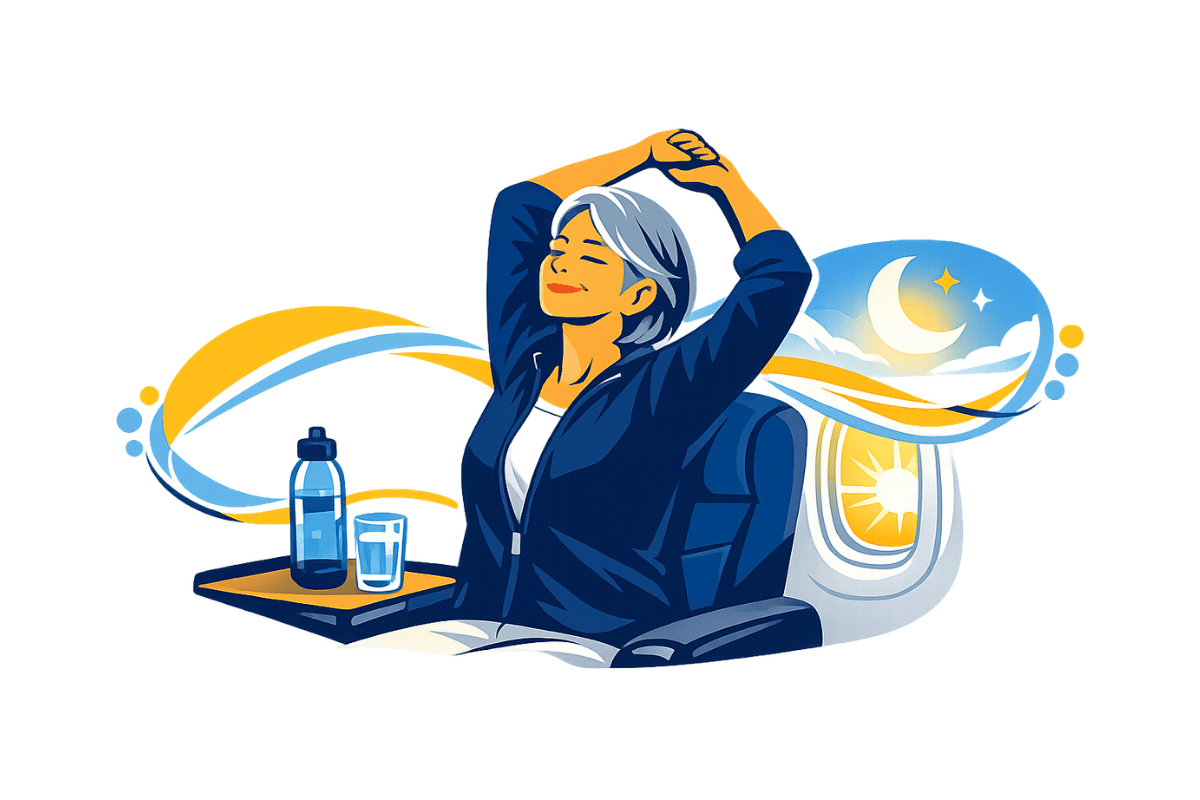
How to Biohack Jet Lag After You Land
Get Natural Light as Soon as Possible
Light is the most powerful tool for resetting your circadian rhythm. Getting sunlight within the first hour of arrival helps your body adjust to the new time zone. This is one of the most effective ways to biohack jet lag.
Stay Awake Until Local Bedtime
Even if you feel tired, staying awake until evening helps your body adjust more quickly. Short rests are fine, but long naps can delay your adjustment.
Eat Light, Balanced Meals
Your digestive system may feel confused after travel. Light, balanced meals help support digestion and reduce fatigue. Heavy meals can make jet lag feel worse.
Use Breathwork to Reset Your Nervous System
Travel activates your nervous system. Breathwork helps calm your body and support better sleep. A simple practice involves breathing in through your nose for four seconds, holding gently for a moment and exhaling for six seconds.
Move Your Body to Increase Energy
Gentle movement helps increase circulation, reduce stiffness and support your circadian rhythm. A short walk outside is one of the best ways to biohack jet lag.
How Sleep Influences Jet Lag Recovery
Sleep Helps Reset Your Internal Clock
Deep sleep helps regulate hormones, repair tissues and support your circadian rhythm. When you sleep well, your body adjusts to new time zones more quickly.
Sleep Helps Reduce Travel Fatigue
Travel fatigue often comes from poor sleep during the flight. Supporting sleep after you land helps your body recover and reduces the intensity of jet lag.
Sleep Supports Digestion and Mood
Good sleep helps regulate digestion and emotional balance. This makes it easier to adjust to new environments and routines.
How Stress Influences Jet Lag and Travel Fatigue
Stress Makes Jet Lag Worse
When you are stressed, your body releases cortisol. High cortisol levels make it harder to sleep and harder to adjust to new time zones. Supporting your nervous system helps reduce the intensity of jet lag.
Breathwork Helps Regulate Stress
Breathwork is one of the simplest ways to reduce stress and support your circadian rhythm. Slow, intentional breathing helps calm your body and improve sleep.
Creating Small Pauses Helps Reduce Overload
Travel can be overwhelming. Taking small moments of stillness helps your body reset and reduces travel fatigue.
How to Build a Travel Routine That Supports Biohacking Jet Lag
Create a Consistent Rhythm
Your body thrives on rhythm. Creating a simple travel routine helps your body understand what to expect. This reduces stress and supports better energy.
Use Light, Movement and Hydration Together
Combining these three tools creates a powerful foundation for reducing jet lag. Light resets your rhythm. Movement increases circulation. Hydration supports digestion and energy.
Support Your Body With Gentle Evening Habits
A calm evening routine helps your body wind down and prepare for sleep. This supports faster recovery from jet lag.
The Benefits of Biohacking Jet Lag
When you support your biology, travel becomes easier. You feel clearer, more energised and more capable of enjoying your trip. You recover faster, sleep better and move through new environments with more ease.
Biohacking jet lag is not about forcing your body to adjust. It is about working with your biology so your body can do what it is designed to do. When you use these simple habits consistently, travel becomes less draining and more enjoyable.